
Reading the record of environmental change — from today’s microplastics to longer-term trends of climate, fire, drought, and vegetation.
Environmental Change Laboratory
The Environmental Change Laboratory (Johanson Lab) in the Department of Geosciences at Florida Atlantic University studies how landscapes change, and how people are part of that change. Lake, wetland, and peatland sediments store a continuous record of vegetation, fire, climate, and human activity, and their newest layers capture the pollutants arriving now. We core, process, and read that record in one laboratory, with graduate and undergraduate researchers involved at every step.
Two Threads
Modern environmental hazards and pollutants
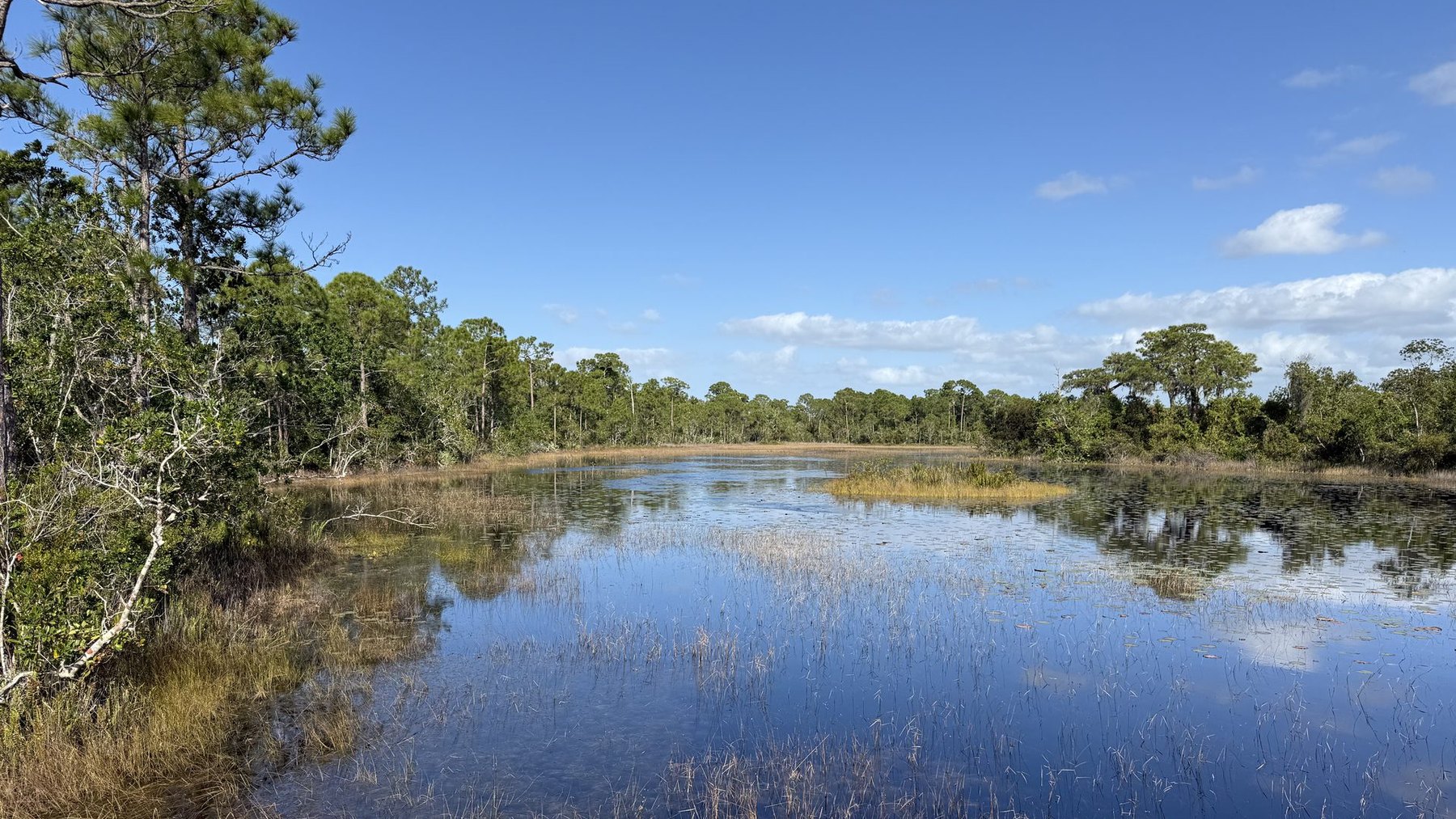
Microplastics and other contaminants in wetland and lake sediments, surface water, soils, and vegetation, from a protected urban wetland in coastal Florida to alpine lakes in Switzerland, coastal ecoregions in the Philippines, and vineyard soils in Argentina. Where do they accumulate, what controls their distribution, and what is the baseline before management decisions are made?
Long-term environmental change
Pollen, charcoal, diatoms, and sediment geochemistry from cores spanning hundreds to thousands of years reconstruct vegetation, fire, and climate, and the arrival, growth, and resilience of the people living in those landscapes. Field sites center on Costa Rica, Ecuador, and the Dominican Republic, with new records from Florida and Maine.
Read more about both threads and the places we work on the Research Projects page, and about how we work in the laboratory.
Recent Publications
- Baudrix, J.*, Johanson, E.N., and Buchanich, J.A.* (2026). Hydrological and sedimentary controls on microplastic distribution in an urban wetland, Spruce Bluff Preserve, Florida. Evolving Earth 4, 100158. doi.org/10.1016/j.eve.2026.100158
- Horn, S.P., Haberyan, K.A., Johanson, E.N., Murillo Herrera, M., Tomlinson, A., Lane, C.S., Friedel, T.*, and Steckler, M.R. (2026). A 1500-year paleolimnological record from an ancient debris avalanche landscape in west central Costa Rica. Physical Geography 47(3), 246–277. doi.org/10.1080/02723646.2026.2634482
- Garzón-Oechsle, A.E.*, Johanson, E.N., Nagarajan, S., and Martínez, V. (2025). In between the sites: Understanding Late Holocene Manteño agricultural contexts in the Chongón-Colonche Mountains of coastal Ecuador through UAV-lidar and excavation. Journal of Field Archaeology 49(2). doi.org/10.1080/00934690.2024.2439223
- Swick, K.*, Johanson, E.N., and Comas, X. (2024). A multiproxy analysis of modern environmental change within a cypress swamp forest, Collier County, FL. Discover Environment 2, 39. doi.org/10.1007/s44274-024-00065-x
- Friedel, T.*, Johanson, E.N., and Horn, S.P. (2024). Post-Conquest vegetation and fire dynamics at Laguna Carse, Costa Rica: A pollen and microscopic charcoal record. Vegetation History and Archaeobotany. doi.org/10.1007/s00334-023-00981-7
* Environmental Change Lab student author. Full publication list on Google Scholar.
In the News
- Even Protected Florida Wetlands Can’t Escape Microplastic Pollution — FAU News Desk on the Spruce Bluff Preserve study, August 2026; also covered by Phys.org and Earth.com.
- Meltdown: A More Sustainable Way Forward for South Florida — interview in Palm Beach Illustrated, June 2024.
Join the Lab
We welcome graduate students through the M.S. and Ph.D. programs in Geosciences and the Ph.D. in Integrative Biology, and FAU undergraduates through Directed Independent Research and honors theses. See People for who is in the lab now, and Contact for how to get in touch.
Follow the lab on Instagram: @EnvChangeLab